
Queen Genepil didn't choose to be queen. She was 19, already married, living in a village near the Baldan Bereeven Monastery, when the king's counsellors showed up and said she was coming with them. They'd been scouting women between 18 and 20 after the previous queen, Dondogdulam Khatun, died in 1923. Genepil fit the bill. So they took her.
That's the part that gets lost in the romanticized versions of this story. The last queen of Mongolia wasn't some ambitious social climber or a political player. She was a teenager who got drafted into a dying monarchy, forced to separate from her first husband, and married off to a king who was basically on his deathbed. Bogd Khan died less than a year later. Then the communists took over. Then, in May 1938, they shot her.
She was 32. Maybe 33. The records aren't great. What we do know is that Genepil's life was a series of events that happened to her, not choices she made. And that's exactly why her story sticks with you.
The Last Queen of a Failing State
Mongolia in 1923 was a mess. The Bogd Khanate had been propped up by the Russians after the 1911 revolution against Qing China, but by the early 1920s, the country was effectively a Soviet satellite. The king, Bogd Khan, was blind and frail. His first wife, Dondogdulam, had died in 1923, and the court needed a replacement—partly for tradition, partly because the king's household required a female figurehead. So they went looking for a new khatun.
Genepil, born Tseyenpil in 1905, was selected from a group of 18 to 20 young women. She was already married to a man named Luvsandamba—some sources say that's the same man she'd later remarry after the monarchy fell. The counsellors chose her, and just like that, she became queen consort in December 1923. She was 19.
Her reign lasted five months. Bogd Khan died on May 20, 1924. The monarchy was abolished almost immediately. The Mongolian People's Republic, a Soviet puppet state, was declared later that year. Genepil was out of a job.
Life After the Throne
This is where the story gets murky. After Bogd Khan's death, Genepil left the court. She married Luvsandamba—again, possibly her first husband—and had several children, including a daughter named Tserenkhand. For a while, it seems like she tried to live a normal life. But normal was hard to come by in 1930s Mongolia.
The Stalinist purges hit Mongolia hard. Between 1937 and 1939, an estimated 20,000 to 35,000 people were executed—monks, intellectuals, former nobles, anyone suspected of disloyalty to the Soviet-backed regime. Genepil, as a former queen, was a walking target. In May 1938, she was arrested, tried by a kangaroo court, and shot by a firing squad in Ulaanbaatar.
She was 32 or 33 years old. Her crime? Being the last queen of a country that no longer wanted a queen.
The Photo That Fooled Everyone
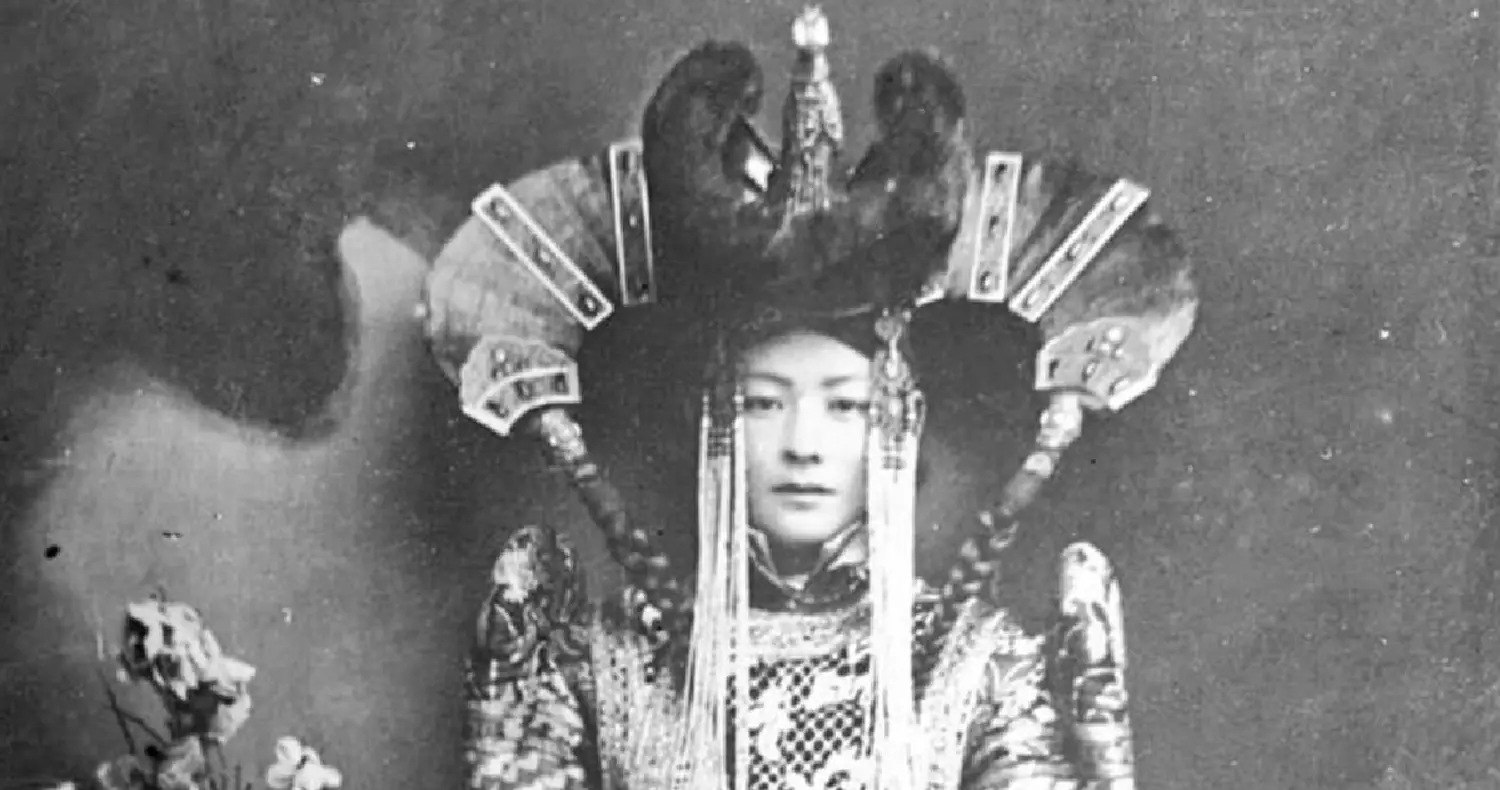
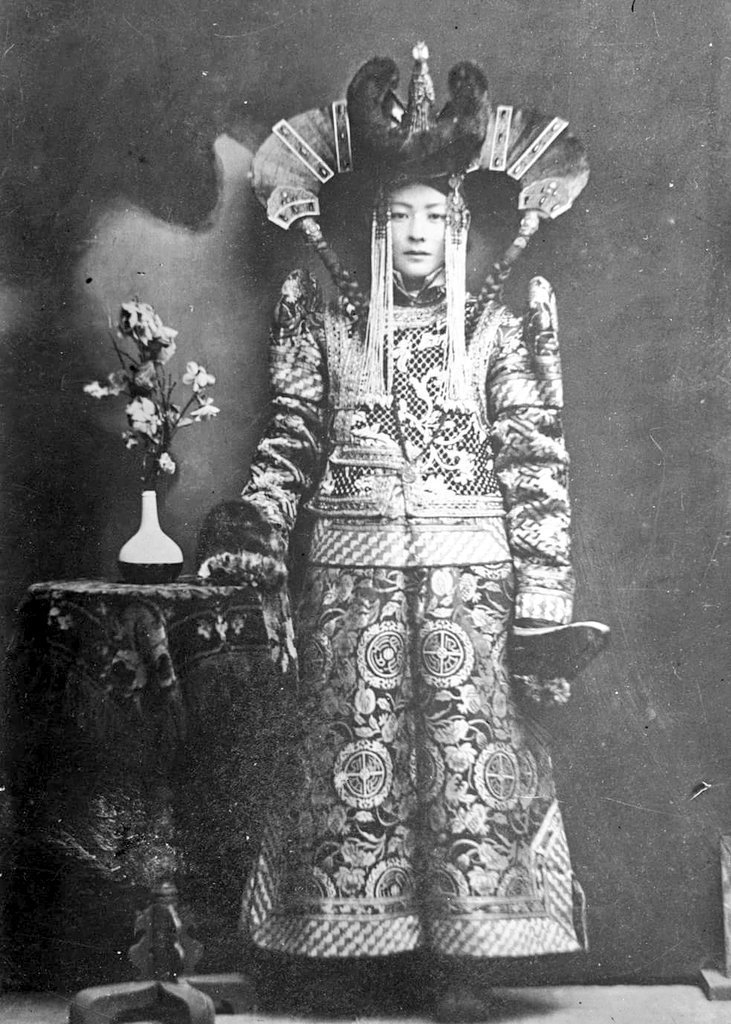
You've probably seen the picture. A young woman in an elaborate headdress, staring straight at the camera, her expression unreadable. It's been shared on Reddit, Facebook, Instagram—always with the same caption: "The last photo of the last queen of Mongolia, just before she was killed in 1938." It's a haunting image. It's also not her.
That photo is a still from a 2000 Mongolian film called The Last Queen of the King. The actress in the shot is playing Genepil, but it's not Genepil. AFP Fact Check debunked this back in 2021. Archivists and historians confirmed there's no known photograph of Genepil from that period. The internet, being the internet, didn't care.
So why does this matter? Because the fake photo has become the face of Genepil's tragedy. People see that image and think they're looking at a doomed queen's final moments. They're actually looking at a costume drama. The real Genepil—the teenager forced into a royal marriage, the mother who lost everything under Stalin—she's been replaced by a fictional version of herself.
And here's the kicker: we don't even know what Genepil actually looked like. The real woman is a ghost. All we have are a few grainy, unverified portraits that may or may not be her. The most famous image of her is a lie.
Why Genepil's Story Still Haunts Us
There's something about Genepil that people can't let go of. Maybe it's the sheer unfairness of it all. She didn't ask for power, didn't scheme for it, didn't do anything except be young and female in a country that was tearing itself apart. And for that, she was executed.
But there's also the Star Wars angle. A lot of people took one look at that movie still and thought, "Wait, that's Padmé Amidala." The resemblance is uncanny—the headdress, the makeup, the regal posture. It's led to a whole subgenre of internet jokes about George Lucas drawing inspiration from Mongolian royalty. The truth is probably more mundane: Lucas borrowed from a lot of cultures, and Mongolian aesthetics were definitely in the mix. But the Genepil connection is pure coincidence. The photo everyone thinks is her is from a movie made in 2000, long after The Phantom Menace came out.
Still, the comparison stuck. And maybe that's because Genepil's story feels like a space opera tragedy—a young queen, a dying kingdom, a brutal empire closing in. But unlike Padmé, Genepil didn't get a noble death scene. She got a firing squad in a prison yard, her body dumped in an unmarked grave. No one even knows where she's buried.
That's the thing about historical erasure. It doesn't just kill people. It kills their humanity. Genepil was reduced to a symbol—the last queen, the tragic figure, the viral photo. But she was also a mother, a daughter, a woman who probably just wanted to live her life. And that part of her story is gone forever.
The Real Lesson Here
Every few months, the Genepil photo makes the rounds again. Someone posts it on Reddit with a sob story caption, and the upvotes pour in. The comments fill with outrage and sadness and Star Wars jokes. And then everyone moves on.
But here's the thing: the photo is fake, but the tragedy is real. Genepil existed. She was forced into a marriage with a dying king. She was executed by a regime that saw her as a threat. And she's been turned into a meme.
Maybe that's the real lesson of the internet age. We don't just consume history; we remix it. We take a real woman's suffering and turn it into a viral post, complete with a fake photo and a snappy caption. And in doing so, we lose the actual person.
So the next time you see that image of "Queen Genepil," remember: the woman in the photo is an actress. The real queen is still out there, somewhere in the historical record, waiting to be seen. And we owe it to her to look a little harder.