
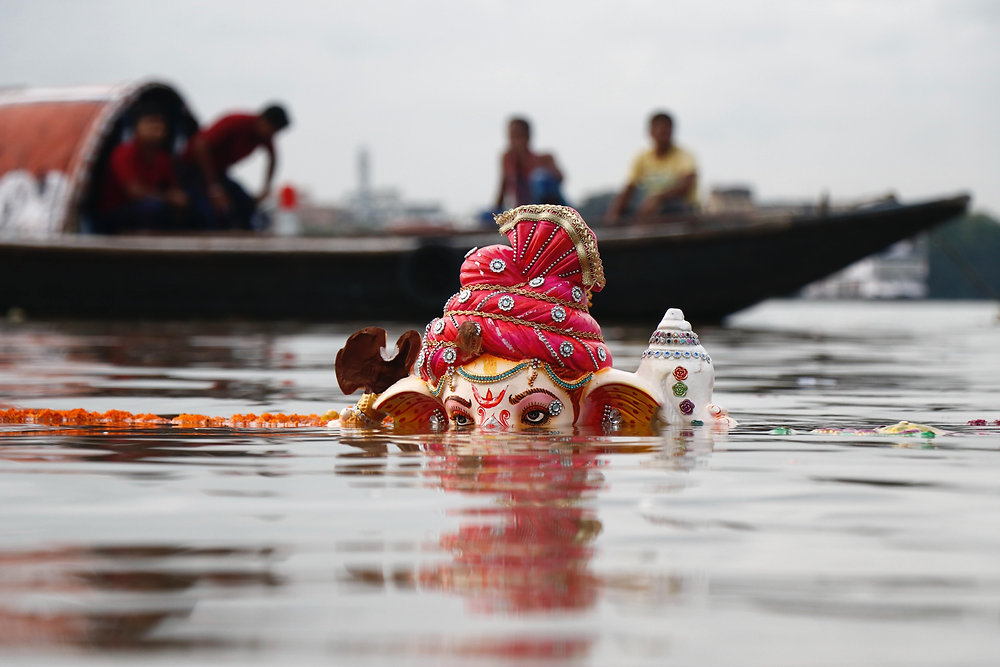
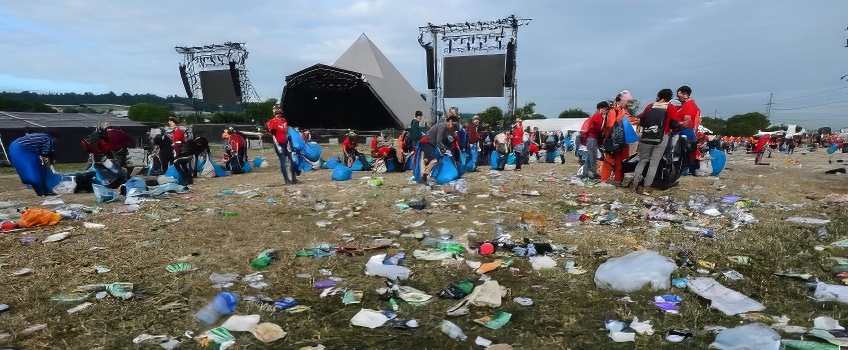
There's a particular kind of exhaustion that comes from cleaning up after other people's transcendence. You wake up before dawn, pull on gloves, and walk into a field that was, hours ago, a sacred gathering. Now it's a landfill with a view. Plastic bottles, food wrappers, flowers, and the unmistakable smell of a river that's been used as a septic tank. You fill bag after bag. And somewhere in the back of your mind, you know that next year, the same crowd will return, the same offerings will be made, and the same mess will be waiting.
This is the reality for environmental volunteers in places where waste management is more of a suggestion than a system. In the United States, a music festival might leave behind a few tons of trash, but there's a municipal crew and a recycling center somewhere down the line. In India, where nearly one billion Hindus live and the Ganges River is a goddess, the scale is different. The festivals are bigger, the faith is deeper, and the cleanup is often left to a handful of exhausted people with garbage bags and a sense of duty that borders on martyrdom.
The Ganges: A Goddess Drowning in Our Devotion
Let's talk about the Ganges. Not as a river, but as Ma Ganga, the goddess who descended from heaven to purify the ashes of the dead. According to Shiva devotees, she fell from the cosmic and was caught in Shiva's hair, her waters running in rivulets to earth. For millions of Hindus, a single drop of Ganges water can absolve lifetimes of bad karma. Dying in Varanasi, on its banks, promises moksha—release from the cycle of rebirth. This is not metaphor. This is a living, breathing faith that has shaped Indian civilization for millennia.
And yet, the river is toxic. The Harvard Religion and Public Life case study puts it bluntly: "Many Hindus will not drink or bathe in the river—an important part of their faith—due to the toxic waters." Let that sink in. The very river that is believed to heal is now so polluted that the faithful are afraid to touch it.
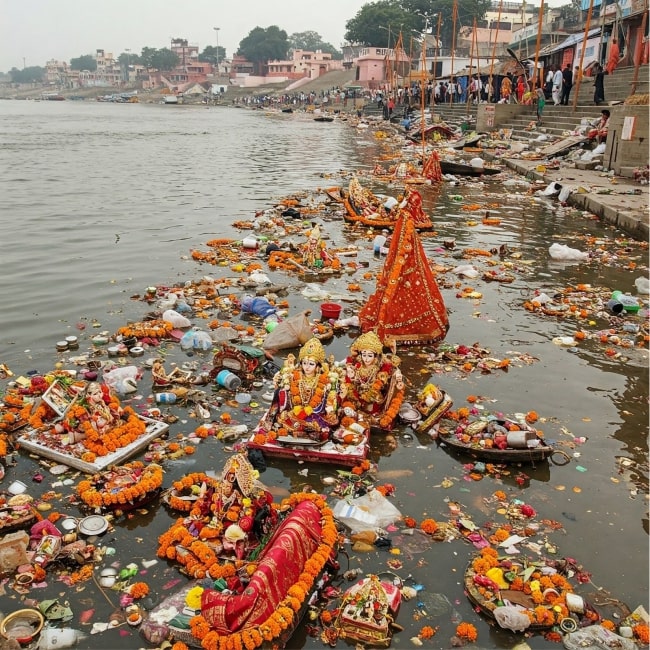
What happens during festivals like Ganesh Chaturthi or Durga Puja is a perfect storm of faith and waste. Idols made of plaster of Paris, painted with chemical dyes, are immersed in the river. Research published in the International Journal of Creative Research and Management shows that river water becomes acidic after idol immersion, with a measurable increase in pollutants. The offerings—flowers, milk, food, and yes, plastic—shift the biological oxygen demand and oxygen levels, suffocating aquatic life. The influx of millions of pilgrims overwhelms any sanitation infrastructure, assuming it exists at all. The result is an ecological disaster wrapped in a spiritual celebration.
And here's the thing: this isn't a secret. The data is there. The images of post-festival Ganges are shocking enough to go viral every year. But the festivals continue, the immersions continue, and the river continues to choke. Why? Because the alternative feels impossible. How do you tell a billion people that their most sacred act is killing the very goddess they worship? How do you ask a devotee to choose between environmentalism and eternity?
The Volunteer's Burden: When Individual Action Meets Systemic Failure
This is where the individual volunteer enters the story. There are people—ordinary, exhausted, often anonymous—who spend their weekends and festival days pulling trash out of rivers. They organize cleanups, they raise awareness, they beg local officials to install waste bins. And they are fighting a losing battle. Not because they're not working hard enough, but because the system around them is broken.
Hannah Ritchie, a data scientist at Our World in Data, put it perfectly: "Individuals aren't going to solve climate change, but they are an important part of the system that will get us there." The problem is that in many places, the system doesn't exist. There's no garbage collection, no sewage treatment, no enforcement of environmental laws. So the volunteer becomes the entire system. And that's a crushing weight.
Think about the psychological toll. You spend a day cleaning a riverbank, filling 200 bags of trash, feeling a sense of accomplishment. Then the next festival comes, and the same stretch of river is buried under a fresh layer of offerings and plastic. You do it again. And again. At what point do you start to feel like Sisyphus, rolling a boulder uphill only to watch it roll back down? At what point does hope curdle into resentment?
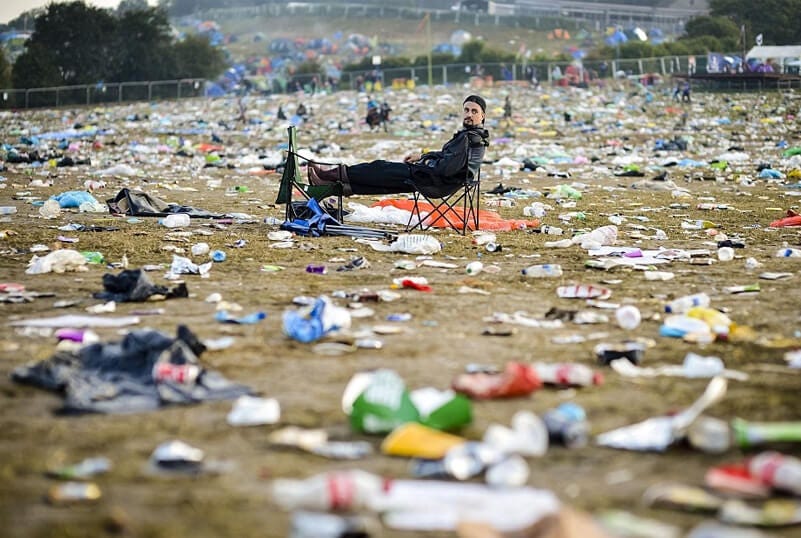
I've talked to volunteers who describe a feeling of profound loneliness. They're the ones who see the problem up close, while the rest of the world either doesn't see it or doesn't want to. There's a particular kind of despair in knowing that the people who made this mess are your neighbors, your family, your fellow believers. And they'll do it again next year, because to them, the mess is an acceptable price for salvation.
Faith vs. Facts: The Cognitive Dissonance of Devotion
There's a deeper issue here, and it's about waste management. It's about the stories we tell ourselves to justify behavior we know is harmful. During a festival, you might hear someone say, "But it will bring blessings," as they toss a plastic bag full of offerings into the river. And then they shut down their brain. The cognitive dissonance is staggering. The same person who wouldn't dream of littering in a temple courtyard will happily throw non-biodegradable waste into a sacred river, because the act is wrapped in ritual.
This isn't unique to Hinduism, of course. Every culture has its sacred pollutions. In the West, we drive to church in gas-guzzling SUVs and then pray for the planet. We buy products wrapped in layers of plastic and then post about saving the oceans. The difference is scale and consequence. When a billion people engage in a ritual that directly pollutes a river, the impact is not symbolic. It's measurable, deadly, and accelerating.
And yet, the volunteers keep showing up. Not because they think they'll win, but because they can't not show up. It's a moral compulsion. The alternative—to walk away, to accept the mess, to stop caring—is a kind of spiritual death. So they put on their gloves, and they pick up someone else's offerings, and they try not to think about next year.
What Would It Take to Change This?
So what's the answer? The research from ClimateWorks says that "systems change and individual behavior change are not conflicting frameworks for how to mitigate climate change, they are two sides of the same coin." That's true, but it assumes a functioning system. In places like Varanasi, the system is broken; it's barely there. You can't ask individuals to recycle when there's no recycling plant. You can't ask them to use less plastic when plastic is the cheapest and most available option. You can't ask them to stop polluting the river when the river is the only place to put the waste.
This is where the conversation gets uncomfortable. It's easy to blame individuals for their choices. It's much harder to build the infrastructure that makes sustainable choices possible. And it's even harder to challenge deeply held religious beliefs. But if we're serious about saving the Ganges—and the countless other rivers and ecosystems threatened by cultural practices—we have to do all three. We have to honor the faith while also telling the truth about the impact. We have to provide alternatives that are actually accessible. And we have to stop pretending that a few volunteers with garbage bags can fix a systemic problem.
The good news is that there are glimmers of hope. Some festival organizers are switching to eco-friendly idols made of clay and natural dyes. Local governments are setting up designated immersion tanks to reduce river pollution. NGOs are working with priests and community leaders to promote greener rituals. These efforts are small, but they're growing. And they prove that change is possible when people are willing to adapt tradition to reality.
But the clock is ticking. The Ganges has been dying for decades, and every festival season brings it closer to the edge. The volunteers who clean up after these festivals are picking up trash; they're holding back the tide of ecological collapse. They deserve more than our admiration. They deserve a system that works. They deserve a faith that doesn't ask them to choose between their goddess and their planet.
, the question isn't whether one person can make a difference. The question is whether we're willing to build a world where that difference doesn't have to be a heroic, lonely, and ultimately unsustainable act. Because right now, for too many volunteers, the burden is too heavy, and the river is still full of trash.