
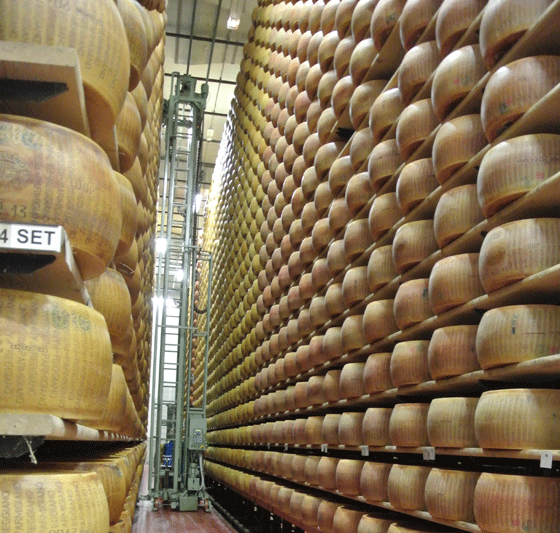
Here's a sentence I never thought I'd write: a bank in Italy has hundreds of thousands of cheese wheels sitting in climate-controlled vaults, and they're not for a very aggressive fondue party. They're collateral. Since 1953, Credito Emiliano, a regional bank based in Reggio Emilia, has been accepting young Parmigiano-Reggiano wheels as security for loans to local dairy farmers. The bank stores the cheese, ages it for up to two years, and only releases it when the borrower repays the loan or the cheese is sold at maturity.
This isn't some quirky PR stunt. It's a deeply rational system. A wheel of Parmigiano-Reggiano takes at least 12 months to age, and often 24 to 36 for the good stuff. During that time, a farmer has a lot of capital tied up in milk, labor, and storage, but no finished product to sell. The cheese is valuable, but it's not liquid. Credem's cheese vaults solve that problem. They hold the cheese as collateral, effectively giving farmers a loan against an asset that becomes more valuable over time, not less.
The numbers are wild. Italy's cheese economy is worth $4.7 billion. Credem itself is no small operation: in 2024, the bank reported total assets of €67.9685 billion and net income of €620.1 million. The cheese collateral program is a tiny slice of that, but it's the most famous slice. Forbes called it "a bank that accepts Parmesan as collateral," and the practice has been covered by everyone from CBS News to Reddit's r/todayilearned.
How the Cheese Loan Actually Works
The process is straightforward. A dairy farmer brings in young Parmigiano-Reggiano wheels, typically aged 12 months or less, to Credem's warehouse. The bank appraises each wheel, which weighs about 80 pounds and can be worth $500 to $1,000 depending on age and quality. The farmer gets a loan for a percentage of that value, usually around 70-80%. The cheese stays in the bank's vault, where temperature and humidity are carefully controlled. The farmer pays off the loan over time, or the bank sells the matured cheese to recover its money.
It's a win-win. The farmer gets liquidity without having to sell a half-finished product at a discount. The bank gets a collateral asset that, unlike a car or a house, actually appreciates as it sits there. And the cheese gets aged in ideal conditions, which improves its quality and final sale price. The only loser is anyone who thought a bank vault full of cheese was a joke.
The Cave System: Where Cheese Sleeps
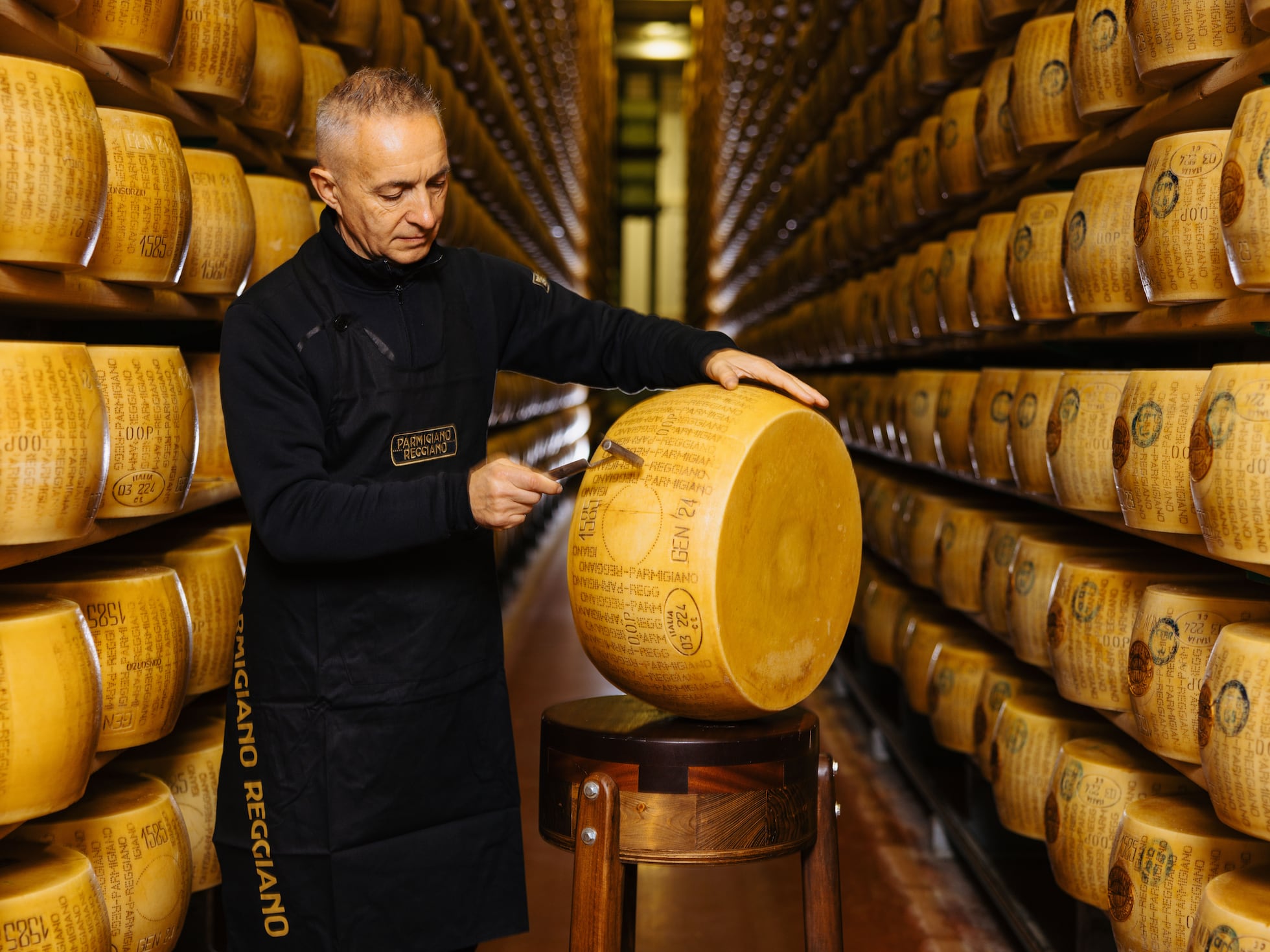
Credem's cheese storage isn't just a big fridge. It's a meticulously managed environment. The bank has multiple warehouses in the Emilia-Romagna region, sometimes called "cheese caves" or "cheese banks." Each vault holds thousands of wheels stacked on wooden shelves, with sensors monitoring temperature and humidity. The ideal conditions are around 16-18°C (60-64°F) with 85% humidity. Too warm and the cheese dries out or grows mold; too cold and it doesn't age properly.
That's where climate change comes in. Rising temperatures in Northern Italy are making it harder and more expensive to maintain those conditions. According to Fortune, warehouse cooling costs have spiked by 30% during summer months. Heat waves have also reduced cows' milk production by up to 10%, because dairy cows simply don't produce as much when it's scorching. Less milk means fewer wheels, and higher cooling costs mean tighter margins for both farmers and the bank.
Marketplace reported that "rising temperatures across the region are pushing producers to rethink how — and even where — they operate." Some are considering moving aging facilities to cooler, higher-altitude locations. Others are investing in more efficient cooling systems. But the fundamental problem remains: a system built on a stable climate is now facing a climate that's anything but stable.
Why This Isn't Just a Gimmick
It would be easy to dismiss the cheese collateral program as a charming Italian eccentricity, like a bank that accepts olive oil or truffles. But it's actually a lesson in how to finance slow-moving, high-value agricultural products. The same model could apply to whiskey aging in Scotland, wine in France, or even artisanal ham in Spain. The key is that the collateral asset has a long maturation period, a predictable increase in value, and a stable market price.
Credem's system works because Parmigiano-Reggiano is a regulated product with strict production standards. Every wheel is stamped with a unique code that traces it back to the dairy, the date, and the batch. That traceability makes the cheese a trustworthy asset. The bank knows exactly what it's holding, and so does any potential buyer. It's a form of securitization, but with a delicious twist.
And no, this isn't some obscure practice that died out decades ago. Credem still actively accepts cheese as collateral today. In fact, the program has grown in recent years as the value of Parmigiano-Reggiano has climbed. One commenter in the research noted that cheese has been a "great appreciating asset" with returns around 900% over 10 years. That's probably an exaggeration, but the direction is right: good Parmigiano gets more valuable with age, and the market has been willing to pay for it.
The Climate Threat Is Real
Here's the uncomfortable part. The very thing that makes this system work—a stable, predictable climate—is disappearing. Forbes reported that "when temperatures peak in Northern Italy, dairy cows produce less milk and the warehouses or 'caves' used to age the Parmigiano Reggiano wheels..." face higher cooling demands. The 30% spike in summer cooling costs isn't a one-off; it's a trend. And it's hitting at the same time that milk production is dropping by up to 10% during heat waves.
That's a double squeeze. Farmers have less milk to make cheese, and the cheese they do make costs more to store. The bank, in turn, faces higher operating costs for its collateral vaults. Some producers are exploring new technologies, like solar-powered cooling or more insulated warehouses, but those are expensive upgrades. The alternative—moving production to cooler regions—would disrupt a system that's tied to specific geographic designations and centuries of tradition.
So what happens if the climate keeps warming? Credem's cheese vaults won't disappear overnight. But the economics will get tighter. Loans backed by cheese might become slightly more expensive, or the bank might require a higher collateral-to-loan ratio. The whole system depends on the cheese being worth more when it matures than when it was deposited. If climate change drives up costs faster than the cheese appreciates, the math stops working.
Is that likely? Not immediately. Parmigiano-Reggiano remains one of the world's most prized cheeses, with strong demand and limited supply. But the margin for error is shrinking. And that's the real story here: even the most carefully constructed financial innovations are vulnerable to the physics of a warming planet.
What This Tells Us About Money
At its core, the cheese collateral program is a reminder that money is just a social agreement about value. A wheel of Parmigiano isn't currency, but it's close enough to serve as one in Emilia-Romagna. The bank trusts it, the farmers trust it, and the market trusts it. That trust is built on centuries of consistent quality and a regulatory framework that prevents fraud.
Climate change is testing that trust. When the conditions that make the cheese possible start to shift, the entire edifice gets a little less solid. It's about cheese; it's about how we finance agriculture, how we think about collateral, and how we adapt to a world that's changing faster than our institutions.
Credem will probably keep accepting cheese for decades. The program has survived the euro crisis, the pandemic, and countless heat waves. But the bank's leaders are surely watching the thermometer. They know that a vault full of cheese is only as good as the climate that made it.