
Look, I get it. Every time you open Twitter or LinkedIn, someone is claiming that AGI is six months away, that AI will replace every knowledge worker by 2027, or that a new model just passed the bar exam, the MCAT, and a Turing test in the same afternoon. And then you ask your AI assistant to draft a reply to a moderately complex email, and it invents a meeting that never happened, misreads the sender's tone, and suggests a deadline that was explicitly ruled out in the second paragraph.
You're not crazy. You're not using it wrong. You're just caught in the capability-reliability gap—the chasm between what AI can theoretically do and what it actually does when you need it to work. And that gap is getting wider, not narrower.
The Numbers Tell a Weirder Story Than the Headlines
According to Gallup's Q4 workplace report, 12% of employees use AI daily, and 26% use it at least a few times a week. At the same time, 49% of employees never touch AI at work. That's a massive split. Most companies have no unified AI strategy: 38% of employees say their organization has integrated AI to improve productivity or quality, 41% say it hasn't, and 21% have no idea. That's not a technology problem. That's a leadership problem.
Organizations are confusing adoption with capability. Just because a few people in marketing are using ChatGPT to write social posts doesn't mean the company has built any real AI muscle. The real capability gap isn't between companies that use AI and those that don't. It's between those that have figured out how to make AI reliable in specific workflows and everyone else who's just letting employees mess around with chatbots.
Your Chatbot Is a Fancy Autocomplete, Not a Brain
Let's get one thing straight: large language models are not thinking. They are probabilistic text generators trained on vast amounts of human writing. They predict the next token based on patterns they've seen. That's it. When they produce an answer, they're not consulting a database of facts. They're sampling from a distribution of plausible-sounding words. That's why they hallucinate—they're optimized for fluency, not truth.
This isn't a secret. MIT Sloan Management Review puts it bluntly: understanding LLMs' limitations can help users discern which tasks they are and are not suited for. But most users have never been taught those limitations. They see a demo where the AI writes a poem or passes a coding test, and they assume it can handle their expense report. Then they're shocked when it confidently tells them that a vendor invoice is due next Tuesday when it's actually due next month.
The capability-reliability gap, as Gerd Leonhard calls it, might explain why generative AI has so far failed to deliver tangible results for businesses that use it. The demos are great. The day-to-day reality is full of quiet, annoying failures.
The Skill Issue Is Real (But Not in the Way You Think)
There's a nasty habit in AI circles of blaming the user. "You're just not prompting it correctly," or "Skill issue," or my personal favorite, "You're using it as a tool instead of an equal." Sorry, but that's nonsense. If I need a PhD in prompt engineering to get a chatbot to summarize a customer support ticket, the tool is broken, not me.
Here's the thing: the average user doesn't have time to learn arcane prompting strategies. They want to type a request in plain English and get a useful answer. When the AI fails at that, it's not a skill issue—it's a design failure. The industry keeps moving the goalposts, promising that the next model will be better, but the fundamental limitations remain.
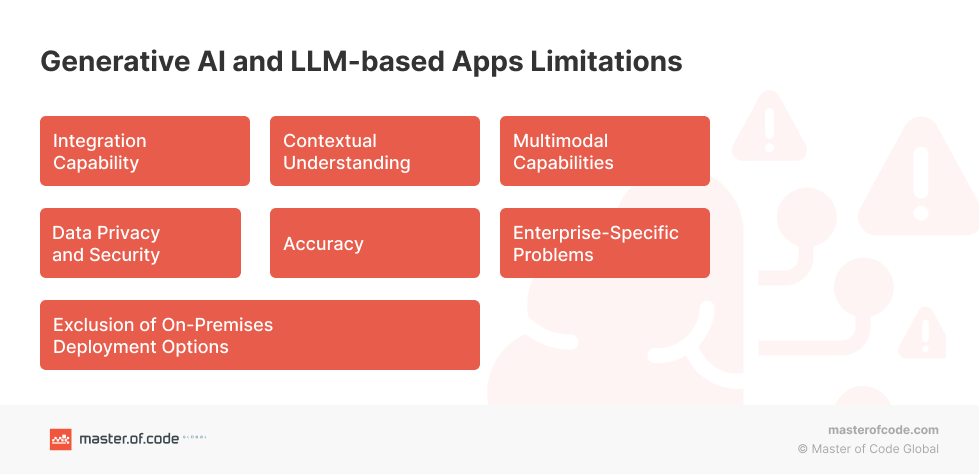
LLMs have limited context handling. They lack real-time knowledge. They hallucinate. They're slow and expensive for certain tasks. In recruitment, for example, LLMs have known limitations including speed and cost, hallucinations, and lack of transparency. But you wouldn't know that from the marketing materials.
So What Actually Works?
I'm not saying AI is useless. Far from it. Higher AI engagement is associated with smaller deviations from historical performance expectations—meaning companies that use AI well can meet their targets more consistently. But the key word is well. That means choosing narrow, well-defined tasks where reliability is high and failure is cheap.
Think about what actually works today: drafting routine emails, summarizing meeting notes (with human review), generating code snippets that a developer will check anyway, translating between languages, extracting structured data from messy text. These are tasks where the AI's output is either reviewed or low-stakes. When you push beyond that—into autonomous decision-making, complex reasoning, or anything requiring real-world knowledge—you're asking for trouble.
And no, throwing more compute at it won't fix the core issues. The limitations are architectural, a matter of scale. Language models don't understand meaning; they model statistical relationships between words. That's why they can write a beautiful essay about the theory of relativity and then fail to correctly answer a simple question about tide pods and humans. (Yes, that comparison is from a real Reddit thread.)
The Future Isn't as Scary as the Hype (Or as Hopeful)
So where does that leave us? Probably not with AGI next year. Probably not with AI running your entire company. But also not with AI being a total bust. The most realistic path forward is boring: AI becomes a useful but unreliable assistant that we learn to supervise. It's like an intern who's brilliant at some things and dangerously clueless about others. You wouldn't hand that intern the nuclear codes, but you might let them draft a memo.
The real challenge is teaching people how to spot when the AI is lying. Because it will lie. Not out of malice, but because it doesn't know the difference between truth and a plausible-sounding sentence. And that's a problem no amount of scaling will solve.
The next time you see a headline about AI surpassing human intelligence, remember your own experience. That gap between the hype and the reality isn't a bug. It's the defining feature of the current AI. And until we close it, we're all just beta testers for a technology that's not quite ready for prime time.