
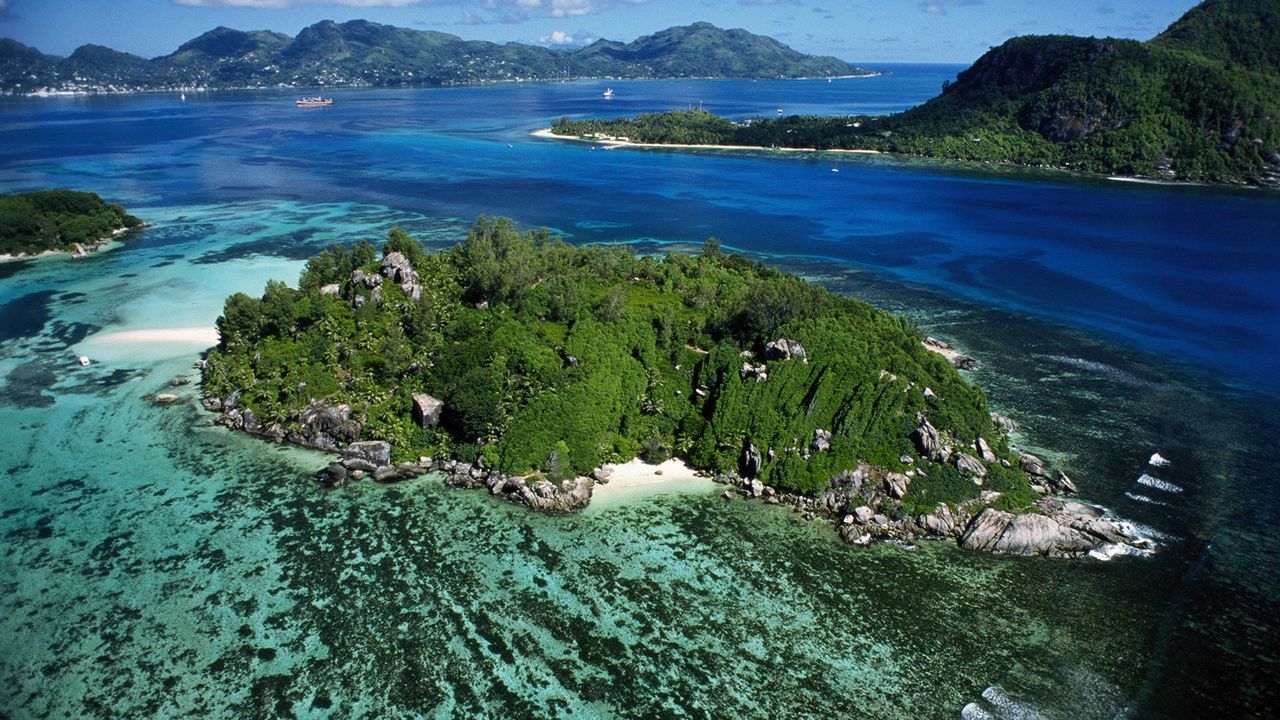
The first thing you need to know about Brendon Grimshaw is that he wasn't a monk. He wasn't a hermit hiding from the world. He was a newspaper editor from Yorkshire who, in 1962, did something so absurd it still sounds like a fever dream: he bought an abandoned island in the Seychelles for £8,000 and decided to spend the rest of his life making it wild again.
This wasn't a rich man's folly. Grimshaw was 36, working in East Africa, and the island, Moyenne, was a 24-acre lump of granite and scrub off the coast of Mahé. No water, no buildings, no people. It had been empty since 1915. The locals thought he was insane. Maybe he was.
But here's the thing: Grimshaw saw something nobody else did. He saw what the island could become. And for the next 50 years, he and a local fisherman named René Antoine Lafortune did the back-breaking work no one else would do. They planted 16,000 trees by hand. They carved paths through the jungle. They introduced Aldabra giant tortoises, which had been extinct on the island for over a century. They built a house, a dock, and a life that most of us can't even imagine.
And when a developer offered Grimshaw $50 million for the island in the 1990s, he said no. Not because he was rich—he lived on almost nothing—but because the island wasn't for sale. It belonged to the trees, the tortoises, and the birds. It belonged to the future.
The £8,000 Gamble
Let's put that price into perspective. £8,000 in 1962 is roughly £149,000 today. That's less than the cost of a one-bedroom flat in London. For that, Grimshaw got 24 acres of rock, a few scraggly bushes, and absolutely no infrastructure. The island had no fresh water, which meant he had to collect rainwater or have it brought over from Mahé. There was no electricity for years. No phone. No neighbors.
Why would anyone do this? Grimshaw's answer was simple: he wanted to create a place where nature could thrive without human interference. He'd seen what development did to other islands—the hotels, the golf courses, the concrete—and he wanted none of it. Moyenne would be different.
But wanting something and actually doing it are two very different things. Grimshaw and Lafortune started by clearing the invasive plants and then began the slow, painstaking work of planting native species. They didn't have machinery. They didn't have a nursery. They carried seedlings up the island's slopes, dug holes in the rocky soil, and hoped for rain.
It took years before the island started to look like anything other than a construction site. But slowly, tree by tree, the green came back.
The 16,000 Trees and the Tortoises
The numbers are staggering. Sixteen thousand trees planted over roughly four decades. That's an average of about 400 trees a year, or more than one a day, every single day, for years on end. And these weren't just any trees—they were carefully chosen native species that would provide food and shelter for birds and other wildlife. Grimshaw wasn't just landscaping; he was rebuilding an entire ecosystem from scratch.
Then there were the tortoises. The Aldabra giant tortoise is one of the largest tortoise species in the world, and it had been wiped out on Moyenne long before Grimshaw arrived. He reintroduced them, starting with just a few individuals, and let them breed. Today, the island is home to dozens of these gentle giants, some weighing over 500 pounds. They wander the paths Grimshaw carved, munching on vegetation and totally unbothered by the occasional tourist.
Grimshaw also attracted birds. Over 2,000 birds now call Moyenne home, including species that had disappeared from the region. He didn't do this by building aviaries or importing exotic species. He did it by creating the right conditions—the right trees, the right undergrowth, the right absence of predators—and then letting nature take its course.
This is the part of the story that gets me. Grimshaw wasn't a trained ecologist. He was a guy with a shovel and a stubborn streak. He learned by doing, made mistakes, and kept going. we're constantly told to leave conservation to the experts, Grimshaw proved that one person with enough determination can make a real difference.
The $50 Million 'No'
In the 1990s, a Saudi prince offered Grimshaw $50 million for Moyenne Island. Let that sink in. Fifty million dollars. Grimshaw was living in a simple wooden house, wearing second-hand clothes, and eating fish he caught himself. He had almost no money in the bank. And he turned it down.
Why? Because he knew what would happen. The prince wanted to build a luxury resort. The trees would come down, the tortoises would be displaced, and the birds would disappear. Everything Grimshaw had spent decades building would be destroyed in a matter of months.
So he said no. Not out of spite, but out of love. The island wasn't his to sell. It was his to protect.
There's a lesson here about what we value. everything has a price tag, Grimshaw reminded us that some things are priceless. Not because they're rare or exclusive, but because they're alive. Because they represent something bigger than ourselves.
The Smallest National Park
Grimshaw died in July 2012, at the age of 87, having lived on Moyenne for 50 years. But he made sure the island would survive him. In 2008, he arranged for Moyenne to become part of the Sainte Anne Marine National Park, and in 2011, it was officially declared a national park—the world's smallest, at just 0.099 square kilometers.
Today, you can visit Moyenne as part of an organized tour. You'll walk the paths Grimshaw built, see the tortoises he saved, and maybe even spot one of the rare birds he attracted. The island is a living monument to one man's stubborn, beautiful vision.
And here's the kicker: Grimshaw didn't do it for fame or money. He did it because he believed it was the right thing to do. He believed that a small island in the middle of the Indian Ocean could be a sanctuary, for animals, but for the human spirit. He was right.
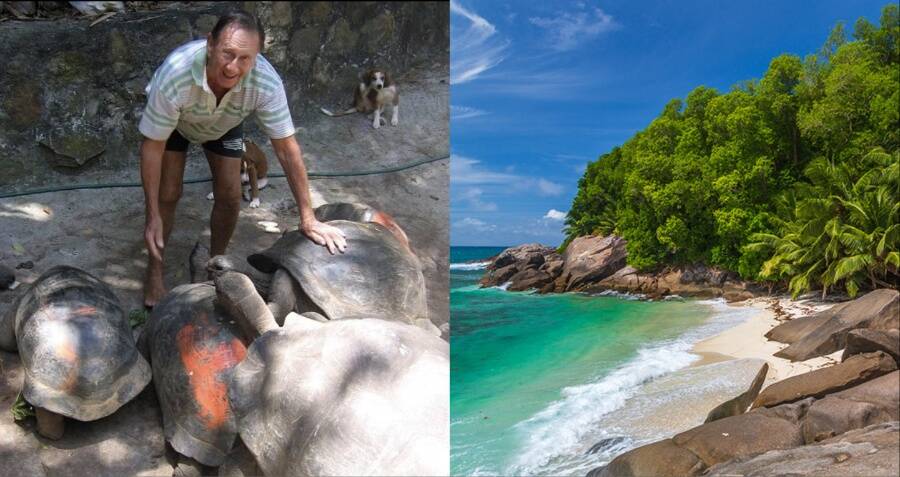
So what's the takeaway? Maybe it's that we all have a Moyenne Island somewhere—a project that seems impossible, a dream that makes no sense to anyone but us. Grimshaw's story proves that if you're willing to put in the work, day after day, year after year, you can move mountains. Or at least plant a few trees on them.
But there's a darker lesson too. Grimshaw was one man, and he needed 50 years to restore 24 acres. The challenges we face today—climate change, habitat loss, species extinction—are orders of magnitude larger. We can't all buy islands and plant trees. But we can all do something, however small, to leave the world a little wilder than we found it.
Brendon Grimshaw's legacy isn't just an island. It's a reminder that the future is built by the stubborn, the patient, and the slightly crazy. And that sometimes, the best investment you can make is in a few seeds and a lot of hope.