
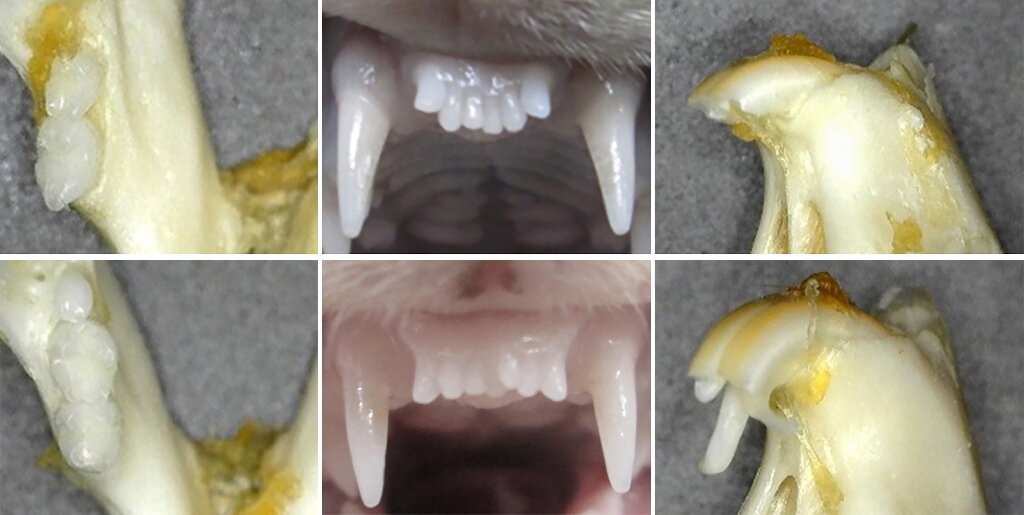
For decades, losing a tooth meant you had exactly three options: live with the gap, get a metal screw drilled into your jaw, or wrestle with a piece of plastic that never quite fits right. That was the deal. No take-backs. No do-overs. Your adult teeth were a one-shot arrangement, and once one was gone, it stayed gone.
That's about to get weird. Because a team of Japanese researchers has spent the last two decades figuring out why your body doesn't just grow a replacement tooth when you lose one. And they found the answer: a single protein that acts like a bouncer at the door of tooth development, blocking the party before it even starts. Block that protein, and the dormant tooth buds you didn't know you had wake up and start building enamel. In mice, it worked. In ferrets—which, fun fact, have dental patterns almost identical to humans—it worked. And now, in humans, the first clinical trial is done. The drug is safe.
The next phase is already underway. If it goes well, you could be regrowing teeth by 2030.
The protein that says "no" to new teeth
The protein is called USAG-1, and it's been hiding in plain sight for years. Researchers knew it existed, but they didn't fully grasp what it was doing. Then Katsu Takahashi, a molecular biologist at Kyoto University, started poking around. He found that mice bred without the USAG-1 gene grew extra teeth. one or two, but a whole extra set. The protein, it turned out, was a biological brake on tooth formation.
Here's the cool part: you have the buds for a third set of teeth sitting in your gums right now. Leftover from your developmental days. But they're locked in a state of arrested development, held in check by USAG-1. Takahashi's insight was simple: if you block the brake, the buds start growing again. "USAG-1 functions as a biological brake on tooth formation," the patent report on tooth regeneration tech puts it. "Removing that brake allowed dormant tooth germs to restart their growth."
And it's a vague signal. The mechanism is surprisingly precise. USAG-1 normally suppresses Bone Morphogenetic Protein, or BMP, which is a key driver of tooth development. Block USAG-1, and BMP activity increases. That's what kicks the dormant buds back into gear. The research published in Science Advances in 2021 showed that a single injection of an anti-USAG-1 antibody was enough to grow a fully functional tooth in mice that were genetically missing teeth. The same study has been cited 52 times since, which in the slow-moving world of dental research is basically a standing ovation.
From mice to ferrets to humans
The leap from mice to humans sounds insane until you look at the animal they tested next: ferrets. Ferrets have a dental formula that's nearly identical to ours. Same number of incisors, canines, premolars, and molars. Same pattern of tooth replacement. If a drug works in ferrets, the odds are pretty good it'll work in people.
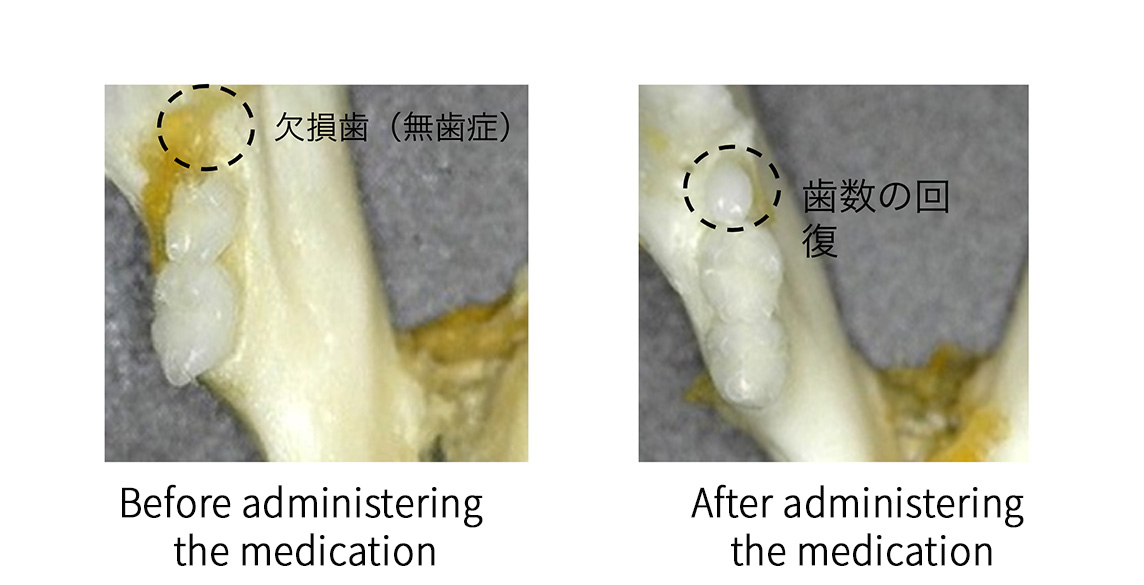
And it did. In a 2023 study, researchers gave ferrets with missing teeth a single dose of the anti-USAG-1 antibody. The ferrets grew new teeth. Not malformed nubs, but properly shaped, functional teeth that erupted in the right position. That was the moment the dental world started paying attention.
By September 2024, the drug had moved into human trials. The first phase, which wrapped up recently, was all about safety. Thirty healthy adults got the drug. No serious side effects. That's the boring but part. Now the team is moving into Phase II, which will test the drug in children with congenital tooth agenesis—a condition where some permanent teeth just never develop. These kids are the ideal first patients because their tooth buds are still there, just stuck. If the drug can unstick them, it'll be the first real proof that tooth regrowth works in humans.
"Anti-USAG-1 antibody is administered to permanent tooth embryos that have failed to grow," the company behind the drug, Toregem BioPharma, explains. "This stimulates growth and the development of new teeth." That's the entire pitch, and so far, it's holding up.
The timeline: why 2030 is actually realistic
Here's the thing about drug development: it's slow. Like, glacial. The average drug takes 10 to 15 years from lab to pharmacy. But this one has a few things going for it. First, the mechanism is stupidly simple. One antibody, one target, one injection. No complex cell therapy, no gene editing, no surgical implantation. That makes the regulatory path smoother.
Second, the first indication is a rare genetic condition. Congenital tooth agenesis affects about 1 in 1,000 people, which qualifies it for orphan drug status in the US and Japan. That means faster reviews, tax breaks, and market exclusivity. It's the same playbook that got many cancer drugs approved in record time.
Third, the team has already solved the manufacturing problem. Producing antibodies at scale used to be a nightmare, but it's now routine. The drug is stable, injectable, and can be stored in a regular fridge. No fancy cold chain, no complicated delivery system.
So when Takahashi says he hopes the drug will be ready for general use by 2030, he's not pulling a date out of thin air. He's looking at the timeline and doing the math. Phase II is underway now. Phase III, if all goes well, could start by 2027. Approval could come as early as 2029. That's aggressive, but not crazy.
And no, this isn't some pie-in-the-sky academic fantasy. The research has real backing. The 2024 study in Scientific Reports on the new antibody drug for congenital tooth agenesis has already been cited 15 times. The review article on tooth agenesis and regeneration published in 2023 has been cited 34 times. Scientists are paying attention because the data is solid.
The dental industry's worst nightmare
Let's talk about money, because that's where this gets interesting. The global dental implant market was worth about $4.6 billion in 2023. By 2032, it's projected to hit $8.1 billion. That's a lot of titanium screws. And a single implant, with the crown and the surgery, runs anywhere from $3,000 to $6,000 in the US. In Japan, it's similar. In Europe, maybe €2,000 to €4,000. It's a massive, profitable, entrenched industry.
Now imagine a drug that costs a few hundred bucks per tooth, requires no surgery, and grows you a real tooth that's actually alive. That's not a disruption. That's an extinction event.
Of course, the industry isn't going to roll over. You'll hear arguments about safety, about long-term efficacy, about whether the new teeth will be as strong as implants. Some of that is legitimate. We don't yet know if regrown teeth will have the same longevity as natural ones, or if they'll be more prone to decay. But let's be real: a lot of the pushback will be about protecting a very lucrative business model. And that's a fight worth watching.
There's also the question of cost. Will this drug be affordable, or will it be another boutique treatment for the wealthy? The pessimists in the comment sections are already sharpening their knives. "Only for the elites in private clinics," one person wrote. "They'll bury it," said another. I get the cynicism. Big Pharma has a track record of pricing miracles out of reach. But here's the counterpoint: this drug was developed at a public university with government funding. The initial indication is a rare disease, which tends to keep prices reasonable. And the manufacturing cost for an antibody is nowhere near the cost of a surgical implant. A single dose could plausibly cost a few hundred dollars. That's a fraction of what people pay for a crown, let alone an implant.
So maybe, just maybe, this one won't be reserved for the one percent. But we'll see. The forces arrayed against affordable tooth regeneration are powerful, and they have a lot of lobbyists.
What could go wrong
Let's pump the brakes for a second. The drug isn't approved yet. Phase II could fail. Phase III could show that the teeth grow in weird places, or that they're misshapen, or that they stop growing after a while. The human body is complicated, and what works in a ferret doesn't always translate.
There's also the question of how many teeth you might grow. Remember those mice that grew extra teeth? That's a real concern. "USAG-1 controls the number of teeth by inhibiting development of potential tooth germs," the Science Advances paper notes. If you block it too much, you might end up with more teeth than you bargained for. The researchers are aware of this, and they're working on dosing to minimize the risk. But it's not a solved problem.
And then there's the practicality. Even if you can regrow a tooth, it takes months. The tooth has to form, erupt, and integrate with the bone. During that time, you have a hole in your mouth. Some people won't want to wait. Implants, for all their flaws, give you a functioning tooth in a few weeks. The regrowth drug won't be an instant fix.
But here's the thing: none of these are dealbreakers. They're engineering problems. And given the amount of money and brainpower being thrown at this, they're likely to get solved. The fact that we're even having this conversation—that a drug to regrow teeth exists and is in human trials—is a sign of how far the science has come.
The end of dentures?
If this drug works, the implications go way beyond vanity. There are millions of people around the world who can't afford implants, who suffer with ill-fitting dentures, who avoid smiling because of missing teeth. For them, a simple injection could be life-changing. And it's about aesthetics. Missing teeth are linked to bone loss, nutritional problems, and even cognitive decline. Regrowing a real tooth doesn't just fill a gap; it restores the entire oral ecosystem.
But let's not get ahead of ourselves. The drug is still years away from your local pharmacy. The trials could hit a wall. The regulatory process could drag on. The price could be astronomical. All of that is possible. But the science is real, the data is strong, and the timeline is finally concrete. For the first time in human history, we have a credible shot at regrowing teeth. That's not a maybe someday. That's a soon.
And when it happens, the dental implant industry is going to have a very bad decade.