
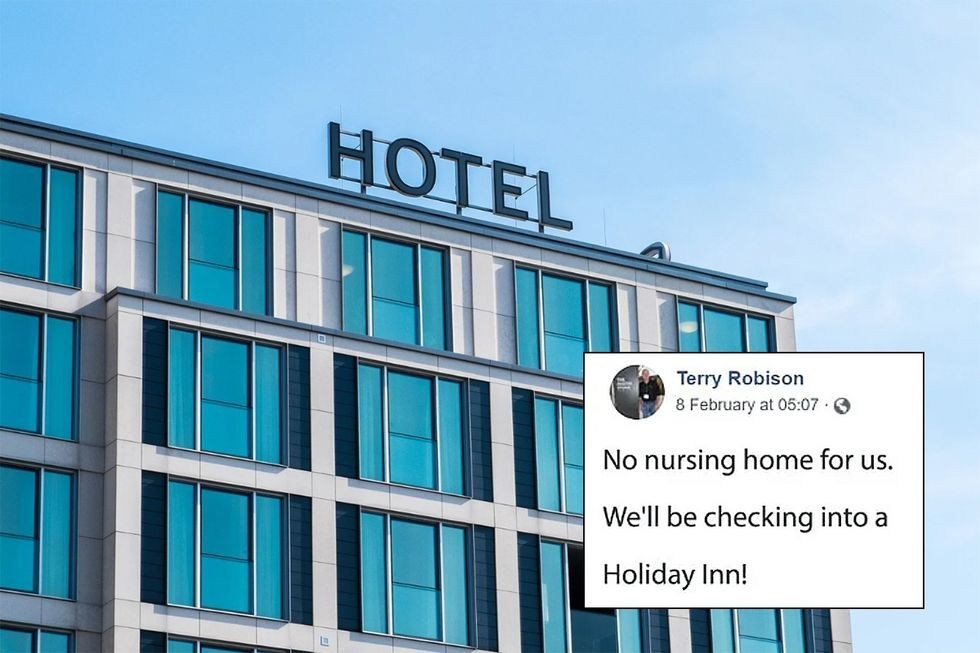
The first time I heard someone suggest retiring to a Holiday Inn instead of a nursing home, I laughed. It sounded like a punchline from a bad stand-up set. But then I looked at the numbers, and I stopped laughing.
The national median daily rate for a semi-private room in a nursing home is $315. That's $114,975 a year. For a shared room. With a curtain for privacy. And that's the median — in Alaska, you're looking at over $1,000 a day. Meanwhile, a hotel with a long-term stay discount and a senior discount can run you $59.23 a night, according to a Forbes analysis. That's $21,619 a year. Less than a fifth of the nursing home cost.
So, is this actually a viable option? Or is it a dangerous fantasy that ignores the reason people need nursing homes in the first place? Let's break it down.
The Math Is Undeniably Wild
Here's the thing: the cost difference isn't just a little bit. It's staggering. Let's put it in concrete terms. The median cost of a private room in a nursing home is $376 a day, or $11,294 a month. That's more than most people's mortgages. Meanwhile, a hotel room — even a decent one — can be had for under $100 a night with monthly or senior discounts. Some people report negotiating rates as low as $40 a night for extended stays at budget chains. That's $1,200 a month. For a room with a private bathroom, housekeeping, and a free breakfast.
But wait, you might say, hotels don't provide nursing care. True. And that's the crux of it. Nursing homes are expensive because they provide round-the-clock skilled nursing, assistance with activities of daily living, medication management, and more. A hotel provides none of that. If you need that level of care, a hotel is not a substitute. But here's the rub: the vast majority of people in nursing homes don't actually need skilled nursing care. According to the National Center for Health Statistics, nearly half of nursing home residents are there primarily because they can't manage at home alone — not because they need intensive medical care. They need help with bathing, dressing, meals, and maybe some light supervision. That's assisted living territory, and assisted living is cheaper than nursing homes — but still way more expensive than a hotel.

Let's talk about what you get for your money. A semi-private nursing home room is exactly what it sounds like: you share a room with a stranger. You have a bed, a nightstand, and maybe a chair. The bathroom is shared. The food is institutional. The schedule is rigid. In a hotel, even a budget one, you get a private room, a private bathroom, a TV, housekeeping, and often a free breakfast. You can come and go as you please. You can have visitors whenever you want. You can order room service. The quality of life difference is enormous.
Quality of Life: The Hotel Wins on Paper
Ask anyone who's spent time in a nursing home, and they'll tell you the same thing: it's depressing. The smell of disinfectant, the fluorescent lights, the constant sound of call bells and moaning. It's a place you go to die, not to live. Hotels, on the other hand, are designed for comfort and enjoyment. They have lobbies with comfortable seating, restaurants, bars, gyms, pools. You're surrounded by people of all ages, the sick and elderly. You can strike up a conversation with a traveling businessperson or a family on vacation. It's a much more stimulating environment.
But there's a catch. Hotels are not set up for aging in place. There are no grab bars in the bathroom, no emergency call buttons, no staff trained to handle medical emergencies. If you fall in the middle of the night, you're on your own. And if you have dementia or cognitive decline, a hotel could be a nightmare. You might wander off, get lost, or forget to take your medications. The lack of supervision and support is a real danger.
So the question becomes: who is this actually for? The answer is: relatively healthy seniors who need minimal assistance, want to save money, and value independence and social interaction over the safety net of a care facility. It's not for everyone, but it's a surprisingly large demographic.
The Trend Is Real, and It's Growing
This isn't just a theoretical idea. There are real people doing this right now. A Texas man named Terry Robison made headlines a few years ago with his plan to live in Holiday Inns instead of a nursing home. He calculated that with senior discounts and long-term stay rates, he could live comfortably for about $59 a night. He pointed out that hotels have security, housekeeping, laundry, and often free breakfast. And if he didn't like the location, he could just check out and move somewhere else. His plan went viral because it made so much sense.
And it's Holiday Inns. A growing number of seniors are opting for extended stays at mid-range hotels like Residence Inn, Homewood Suites, and even cruise ships. The cruise ship option is particularly interesting because it includes meals, entertainment, and sometimes even basic medical care. Some cruise lines offer long-term packages for retirees, and the cost can be comparable to an assisted living facility but with a much higher quality of life.
Every day until 2030, 10,000 Baby Boomers will turn 65. And 7 out of 10 people will require long-term care in their lifetime. The traditional options — nursing homes, assisted living — are becoming unaffordable for many. The median annual cost of a nursing home is now over $114,000, and it's rising every year. Meanwhile, Social Security benefits average around $22,000 a year. The math simply doesn't work. So people are getting creative.
The Ethical and Practical Problems
Look, I'm not saying this is a perfect solution. There are serious issues. First, hotels are not licensed or regulated as care facilities. They have no obligation to provide medical care, and their staff are not trained to deal with elderly residents with health issues. If something goes wrong, they could be held liable, but more importantly, the senior could suffer. Second, there's the social isolation problem. While hotels offer more social interaction than a nursing home in some ways, they can also be lonely. You're surrounded by strangers who come and go. You don't have the same sense of community that a good retirement community provides. And third, there's the issue of stability. A hotel can kick you out at any time. They can raise their rates. They can book up during peak tourist season and leave you without a room. A nursing home, for all its faults, provides a stable, predictable environment.
But here's my hot take: the fact that people are even considering living in hotels is a damning indictment of our elder care system. We've created a system where a hotel room with a free breakfast is seen as a better option than a nursing home. That's insane. Nursing homes charge $315 a day for a shared room with minimal privacy and institutional food, while a hotel charges $59 for a private room with housekeeping and a pool. The nursing home industry has failed us, and people are voting with their feet.
So, is it a good idea? For some people, absolutely. If you're relatively healthy, independent, and looking to stretch your retirement dollars, a long-term hotel stay could be a viable option. But it's not a substitute for skilled nursing care. If you need help with daily activities or have serious medical conditions, you need a facility that can provide that care. The real solution is to fix our elder care system so that people don't have to choose between bankruptcy and a hotel room. Until then, don't be surprised if you see more seniors checking into the local Marriott.
The bottom line? The numbers don't lie. Nursing homes are overpriced and often underdeliver. Hotels offer a cheaper, more comfortable alternative for the right person. But we need to be realistic about the limitations. It's a fascinating trend, and one that's likely to grow as the Boomer generation ages and looks for ways to avoid the nursing home trap.