
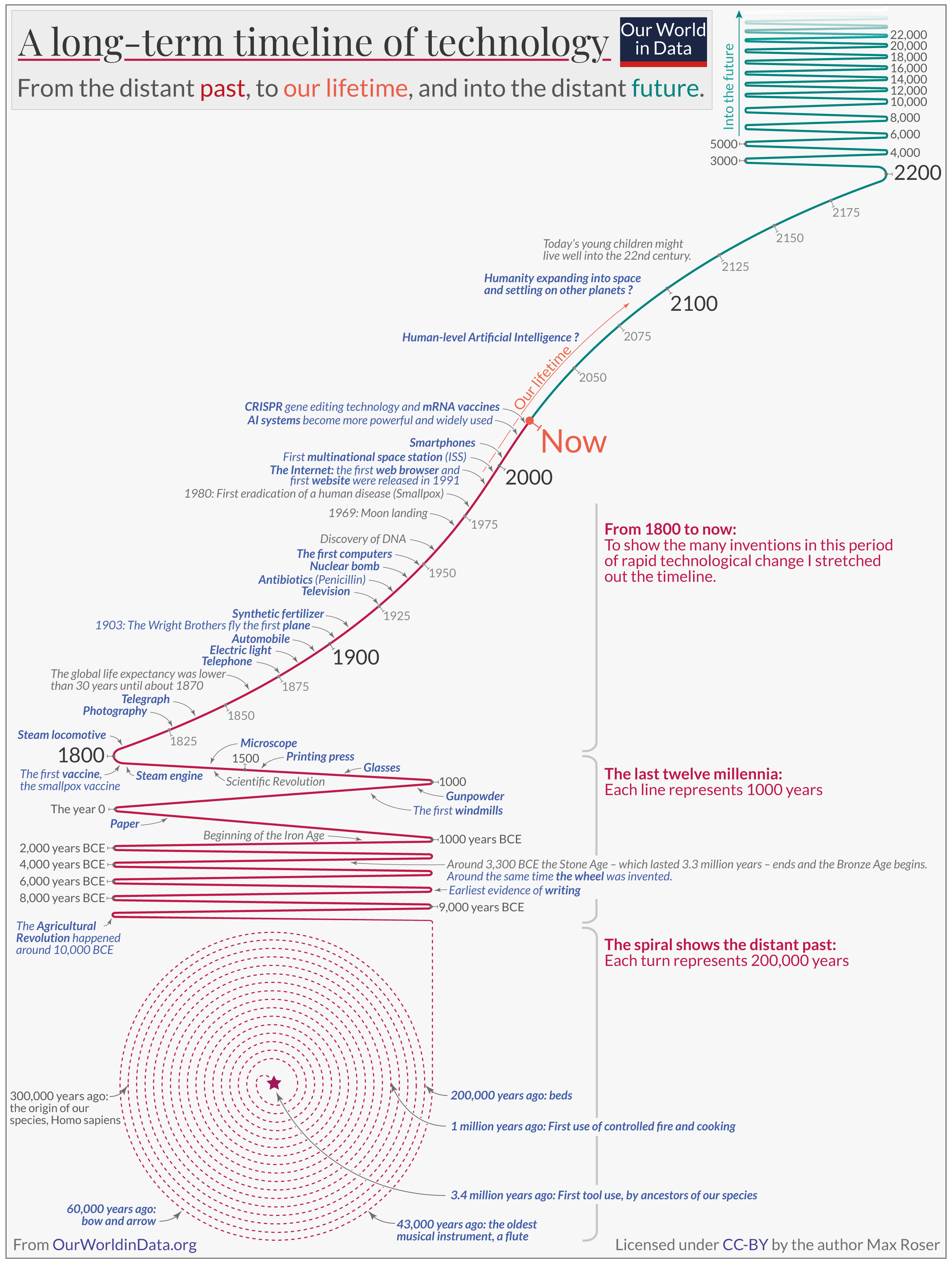
Here's a number that should make your brain itch: 66 years. That's all the time it took to go from the Wright brothers' first powered flight—a 12-second hop covering 120 feet at a blistering 6.8 miles per hour—to Neil Armstrong's boot pressing into lunar dust. Sixty-six years. My grandmother was older than that when she died, and in her lifetime she saw humanity go from not being able to leave the ground to leaving the damn planet.
And then we just... stopped. The last crewed Moon landing was Apollo 17 in 1972. Since then, no human has gone beyond low Earth orbit. Not one. We've sent robots to Mars, sure, and we've gotten very good at building smartphones, but the kind of physics-shattering, "we are now a spacefaring species" progress that defined the 20th century? It stalled. Hard.
So what the hell happened? How did we go from Kitty Hawk to the Sea of Tranquility in less than seven decades, and then spend the next five decades circling our own planet like a dog chasing its tail? The answer isn't just money, though money's a big part. It's politics, it's physics, and it's a weird collective failure of imagination.
The Greatest Leap in Human History (Seriously, Look at the Math)
Let's put the 66-year thing in perspective. The Wright brothers made their first flights on December 17, 1903, in a freezing headwind gusting to 27 miles per hour. They were bicycle mechanics from Dayton, Ohio. They had no formal engineering degrees, no government funding, no massive R&D lab. Just a print shop, a bike shop, and an obsessive need to solve the problem of controlled flight. Their first flight traveled 120 feet—shorter than the wingspan of a Boeing 747. Top speed: 6.8 mph. You could jog faster.
Now fast-forward. In 1969, Apollo 11 lands on the Moon. The Saturn V rocket that got it there stood 363 feet tall, produced 7.6 million pounds of thrust, and carried three humans, a lunar module, and a bunch of rocks back. The computing power on board was less than what's in a modern digital watch, but it got the job done. In 66 years, we went from a glorified kite with a motor to a machine that escaped Earth's gravity well entirely.
That's not progress. That's a rupture in the fabric of what was thought possible.
And it wasn't just aerospace. The 20th century gave us antibiotics, nuclear energy, the transistor, the internet (in its primordial form), the double helix, plate tectonics, and the Green Revolution. In 1900, the average American lived to be about 47. By 2000, it was 77. In 1900, the fastest a human could travel was about 60 mph on a train. By 1969, we were moving at 24,000 mph to escape Earth. The acceleration wasn't linear; it was exponential. Until it wasn't.
The Great Stagnation: Why the Moon Was a Dead End
Here's the uncomfortable question that a bunch of people on Reddit and Quora keep asking, and they're not wrong: why has human spaceflight been stuck in low Earth orbit since 1972?
The short answer is: the Apollo program was a war project. It wasn't about science or exploration or even national pride—it was about beating the Soviets. The Space Race was a proxy battle in the Cold War, and the Moon was the finish line. Once we crossed it, the political will evaporated. Nixon didn't care about Mars. Congress didn't care about lunar bases. The public got bored after Apollo 13 (and even that was a disaster movie, not a triumph). NASA's budget, which peaked at about 4.5% of the federal budget in 1966, was slashed to less than 1% by 1975 and has basically stayed there.
You can't do Apollo-level things without Apollo-level money. The Saturn V cost about $1.2 billion per launch in 1969 dollars—that's roughly $10 billion today. The entire Apollo program cost about $25 billion, which is $250 billion in today's money. That's not a science budget; that's a military budget. And once the military objective was achieved, the money went elsewhere.
But there's a deeper, weirder reason: physics is a bitch. The Moon is hard, but Mars is harder. The Moon is three days away. Mars is six to nine months. The Moon has no atmosphere to deal with; Mars has dust storms and a thin CO2 blanket. The radiation environment on a Mars trip is brutal. The life support, the food, the psychological strain—it's a different order of problem. We could do Apollo because it was just barely within the limits of 1960s technology. Going further requires new propulsion, new materials, new everything. And we haven't made those leaps.
This is the "Great Stagnation" argument, popularized by economist Tyler Cowen and others: that the low-hanging fruit of physics and engineering has been picked. We got the easy stuff—flight, nuclear fission, semiconductors—and now we're in a period of incremental refinement rather than revolutionary breakthrough. Our smartphones are amazing, but they're just better versions of the iPhone from 2007. The internet is transformative, but it's built on TCP/IP from the 1970s. Space travel is stuck because the next leap requires a fundamentally new energy source or propulsion system, and we don't have it.
Is that true? Or is it a failure of will? I honestly don't know. But I do know that when I look at the 20th century, I see a species that decided to do impossible things and then did them. And when I look at the 21st century, I see a species that's very good at optimizing ads and making videos load faster.
The Political and Social Catalysts: War, Bureaucracy, and the Cult of the Amateur
Let's not pretend the 20th century's progress was some pure expression of human genius. It was driven by war, nationalism, and a bunch of weirdos in garages.
The Wright brothers were amateurs in the best sense. They had no institutional support, no Ph.D.s, no government grants. They funded their experiments with profits from their bicycle shop. They taught themselves aerodynamics by reading everything they could and then building their own wind tunnel. They were obsessive, methodical, and utterly convinced they could solve a problem that had killed dozens of people (glider pilots) before them. And they did it in four years.
Contrast that with modern NASA: a huge bureaucracy with layers of oversight, congressional meddling, and a risk-averse culture that makes even small innovations take decades. The Space Launch System (SLS) has been in development since 2011, cost over $20 billion, and still hasn't flown crew. The Wright brothers went from idea to first flight in less time than it took NASA to write the SLS requirements document.
And then there's the war factor. World War I and World War II were accelerants. The first war turned airplanes from toys into weapons. The second war gave us radar, jet engines, rocketry (via the V-2), nuclear energy, and the modern computer (via codebreaking). The Cold War gave us the Space Race, the internet (via ARPANET), and GPS. Without the existential pressure of "the other side might kill us all," would we have funded any of this? Probably not.
That's the uncomfortable truth: a lot of our greatest technological leaps were born from the desire to blow things up more efficiently. The Apollo program wasn't about exploration; it was about demonstrating that American capitalism could out-engineer Soviet communism. And it worked. But when the threat faded, so did the urgency.
So what's the threat now? Climate change? Pandemics? AI? These are diffuse, global, slow-moving crises. They don't produce the same kind of focused, no-expense-spared effort that a nuclear-armed adversary does. And maybe that's why we're stuck: we need an enemy to push us, and our current enemies are either too abstract or too internal.
Can We Get the Mojo Back?
Here's where I get maybe a little optimistic. There are signs of life.
SpaceX has made rockets reusable, something NASA never managed. The Falcon 9 has flown over 400 times and landed over 350 boosters. Starship, if it works, could put 100 tons into orbit at a fraction of the cost of the SLS. Blue Origin, Rocket Lab, and a dozen other private companies are pushing the envelope. NASA is finally talking about going back to the Moon (Artemis) and maybe to Mars in the 2030s.
But here's the thing: even SpaceX is doing this with 21st-century caution. They iterate fast, but they're not trying to go from zero to Mars in a decade. The physics hasn't changed. The money isn't Apollo-level. The political will is still fragile.
And maybe that's the real lesson of the 20th century: progress isn't a law of nature. It's a choice. It's what happens when a society decides that a problem is worth solving at any cost. The Wright brothers made that choice with a bicycle shop budget. The U.S. made that choice with the GDP of a superpower. But now we're choosing to spend our collective genius on making better algorithms to sell ads, and our collective money on aircraft carriers that will never be used.
I'm not saying we should go back to the Moon just because it's cool (though it is). I'm saying that the 20th century proved we can do impossible things, and the 21st century so far has proven we can't even decide what impossible thing to try next.
That's the real stagnation. Not the technology. The will.
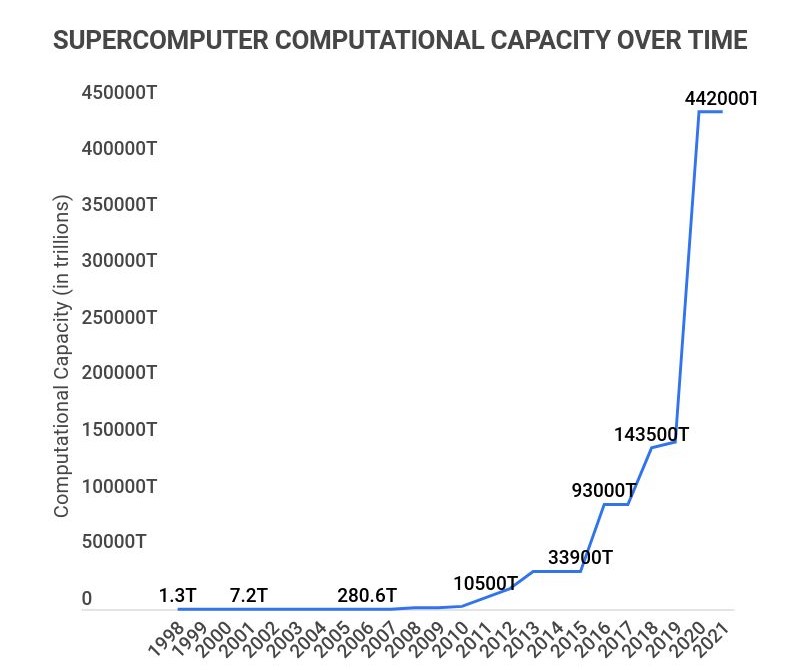
And if you want a visual reminder of what that acceleration looked like, here's a solid rundown of 20th-century tech breakthroughs:
So the next time someone tells you that technology is advancing faster than ever, show them the 66-year gap between Kitty Hawk and Tranquility Base. And then ask: what have we done in the last 66 years that comes close? The internet? Please. The internet is a fancy library with a slot machine attached. It's not walking on another world.
We did the hard thing once. We can do it again. But first, we have to want to.