
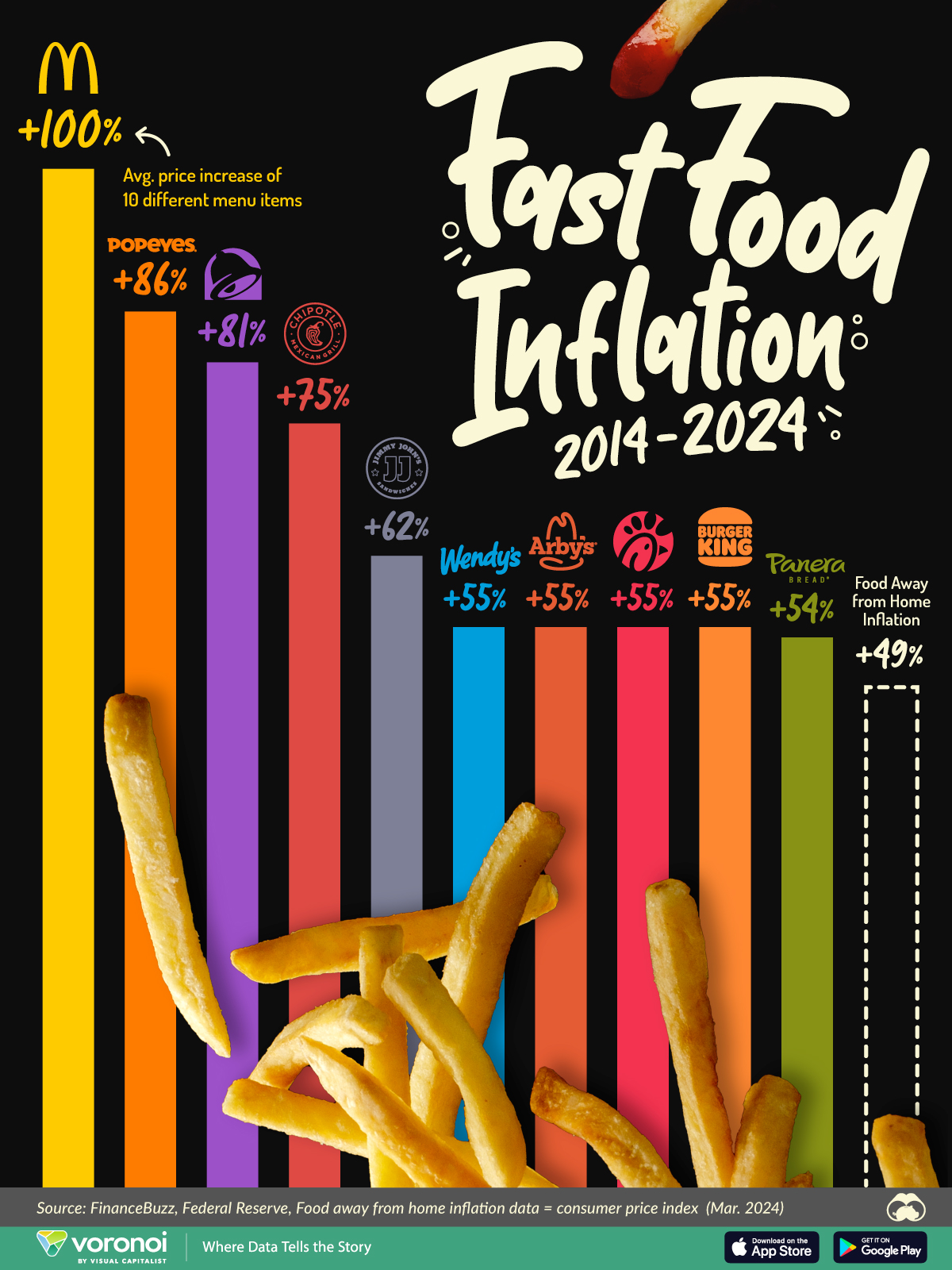
I used to think of fast food as the great equalizer. A Big Mac was a Big Mac, whether you ordered it in Fresno or Flagstaff, from a beat-up Honda or a brand-new BMW. The price might fluctuate a little based on local rent or minimum wage, but the difference was small, predictable, and you could see it coming.
That era is over.
McDonald's has been quietly rolling out an AI-powered pricing system that looks at 14,000 restaurants and spits out suggested prices based on what it thinks customers in your area are willing to pay. The result? Two McDonald's locations two miles apart in Fresno, California, charge $5.69 and $6.89 for the exact same Big Mac. Same burger, same ingredients, same brand. Different price, depending on which storefront the algorithm decides you're more likely to tolerate paying a buck twenty extra.
And that's just the beginning. A Connecticut franchisee caught hell online for charging $18 for a Big Mac meal. He sued McDonald's, claiming the AI tools pushed him toward that price. Meanwhile, customers are doing the math in the grocery aisle and realizing a steak is only a few bucks more than a combo meal. Something's got to give.
The Algorithm Behind the Counter
Let's be clear about what's happening here. McDonald's isn't adjusting prices based on the cost of beef or potatoes. They're using an AI platform that analyzes data across their entire U.S. footprint to estimate "customer willingness to pay in your area." That's corporate speak for: how much can we squeeze before you start complaining?
The system also pulls in public pricing information from nearby rivals like Wendy's and Burger King. So it's about your appetite for a Big Mac; it's about what the guy across the street is charging for a Whopper, and how your local franchisee can undercut or match that price to maximize margin. Wendy's and Burger King have both said they don't use AI in pricing decisions, which makes McDonald's the test case for the entire industry.
McDonald's, for its part, insists this is no big deal. "AI does not set the price of a Big Mac or any other menu item," a spokesperson told the New York Post. "The pricing portal is a tool, not a mandate, designed to provide restaurant-specific recommendations to help franchisees deliver value for customers and make informed business decisions."
But five store owners told Reuters that McDonald's pressured them to use the pricing tools. And a franchisee document showed the company had started tracking in detail how much restaurants deviated from the suggested prices. So it's a "tool" in the same way a performance improvement plan is a "tool." You don't have to follow it, but your next quarterly review might be a little awkward if you don't.
The End of the $5 Value Meal
Remember when fast food was cheap? When you could get a burger, fries, and a drink for under five bucks? Those days are gone, and they're not coming back. Not because the cost of ingredients has gone up that much—though it has—but because the companies have realized they can charge more. And with AI, they can charge exactly as much as they think you'll bear, down to the penny, down to the neighborhood, down to the time of day.
This is the world we're building. A world where the price of a Big Mac is a moving target, where your lunch costs more because you live in a nicer zip code, where an algorithm decides what you can afford based on data you never agreed to share. It's not illegal. It's not even surprising. But it is, frankly, a little dystopian.
And if you think it stops at fast food, you're not paying attention. Grocery stores are experimenting with electronic shelf labels that can change prices in real time. Retailers are using AI to set prices online. The same technology that's charging you $6.89 for a Big Mac in Fresno will eventually charge you $7.89 for a gallon of milk in a wealthier neighborhood. The only question is whether we'll push back before it's too late.
So next time you're standing in line at McDonald's, staring at a menu board that feels just a little too expensive, remember: the price you see isn't the price everyone sees. It's the price the algorithm thinks you'll pay. And you have the power to prove it wrong.